
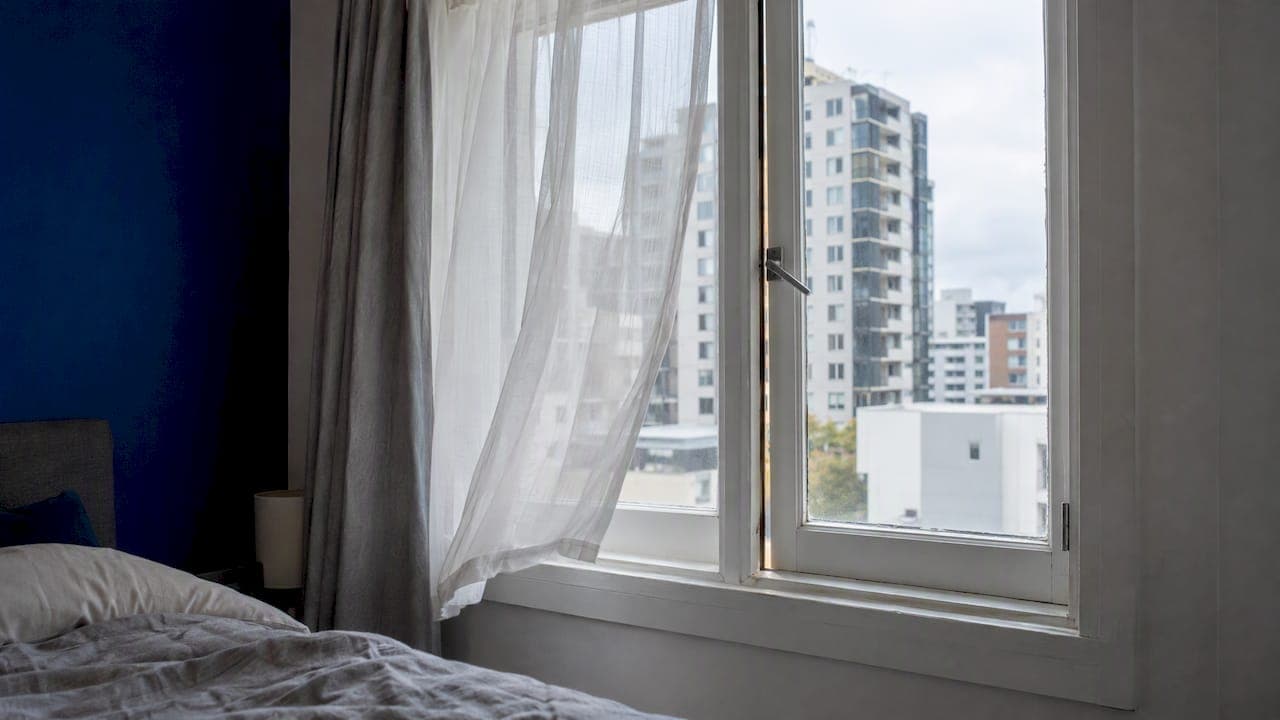
Most draughty windows in Auckland Central come down to one of three things: worn seals, loose or damaged hardware, or a frame that no longer fits its opening. Tighten the catches, replace tired seals and close good curtains, and you can cut a lot of the cold air. If the sash is warped, the frame has moved or the glazing is single, repair only goes so far, and replacement or double-glazed inserts are the lasting fix. This guide shows you how to find the leak, what to try first, and when to call a specialist.
TL;DR
- Find the leak first: moving curtains or a strip of toilet paper held around the frame will show you where air is coming in.
- Fix hardware before seals: tighten or replace loose hinges, catches and latches, then fit a seal sized to the gap.
- Curtains help, but only when drawn, and they do not match double glazing.
- Rot, large gaps, warped sashes or frames that no longer fit usually mean replacement or inserts, not more sealant.
- Do not seal vents, drainage openings or the clearance a window needs to open and move with the seasons.
Table of Contents
- Find where the air is getting in
- Quick, temporary measures for this winter
- Fix the hardware, then the seals
- What not to seal
- Repair or replace: how to decide
- Your replacement options
- What affects cost and disruption
- Our perspective
- Get the draught assessed by an aluminium specialist
- FAQ
- Sources
Find where the air is getting in
Before buying anything, spend ten minutes locating the draught. Guessing leads to sealing the wrong gap and leaving the real one open.
MBIE's Building Performance guidance says draughts from doors and windows are common and often point to a maintenance problem. It suggests two simple tests: watch whether your curtains move on a still day, and hold a strip of single-ply toilet paper around the edge of the window frame. Where the paper flutters, air is getting through.
Work through each window like this:
- Pick a cool, breezy day, or close the house up and run the bathroom and kitchen extractor fans to pull air through any gaps.
- Hold the paper strip along the sash edges, the meeting rail on sliders, the corners of the frame and the gap where the frame meets the wall lining.
- Check the hardware: does the sash sit firmly against the seal when latched, or can you rattle it?
- Look at the seals. Cracked, flattened, hardened or missing rubber and pile is the usual culprit on older aluminium joinery.
- Note any window that does not close squarely. A sash that has to be forced shut is telling you the frame or hinges have moved.
Make a list by room. Bedrooms and living areas facing south or west usually feel it most, and that is where upgrades pay back in comfort first.
Quick, temporary measures for this winter
Curtains are the fastest improvement. MBIE recommends thick lined curtains with close-fitting tracks and pelmets, which reduce heat loss and the feeling of cold through single glazing. The catch is that they only work when drawn, and the same guidance notes they are no match for high-performance double or triple glazing.
A few practical points:
- Curtains should reach the floor or sill and sit close to the wall at the sides, so cold air cannot slide behind and around them.
- A pelmet or a tight-fitting top stops warm air from falling into the gap between curtain and glass.
- Draw them at dusk, before the glass has chilled the room.
- Keep them clear of heaters and make sure they do not block ventilation.
These measures make a cold window more bearable. They do not stop air passing through a failed seal, so treat them as a bridge while you fix the cause.
Fix the hardware, then the seals
The order matters. BRANZ advises that loose hinges, catches and latches should be tightened or replaced before any draught seal is fitted, because loose hardware lets air through all by itself. EECA says the same in its advice on reducing draughts: tighten what is loose, and know that windows which do not fit their frames snugly may need repair by a qualified builder.
Hardware first
Tighten screws on stays, hinges and handles. If a catch no longer pulls the sash tight against the frame, it is worn and should be replaced with a matching part. Wind-battered Auckland homes, especially higher up or close to the water, put hardware under steady stress, so check it each year.
Then choose the right seal
Seals are not one-size-fits-all. Match the product to the gap and to how the window moves. BRANZ's guidance is to choose a draught seal suited to the gap and make sure it does not leave the sash difficult to open or close. A seal that is too thick will stop the latch closing and can strain the frame.
For aluminium joinery, EECA notes that damaged seals can be replaced with correctly sized rubber seals, either by you or by a professional. Take a short offcut of the old seal to the hardware store, or photograph its profile. Aluminium windows use specific channel profiles, and a near match often looks fine and leaks anyway.

How big a gap is too big?
Tenancy Services' draught-stopping guidance for the Healthy Homes standards gives a handy benchmark. Gaps wider than 3 mm that allow air movement will usually need sealing, and a $2 coin fitting into the gap is a practical rule of thumb. The standards apply to rental homes, but the test is a useful yardstick for any owner: if a coin slides in, you have a leak worth fixing.
What not to seal
Over-sealing is a real mistake in a humid city like Auckland. The same Tenancy Services guidance says not to seal intentional trickle vents, drainage openings, extractor or wall ventilation openings, nor the clearances windows need to operate and cope with seasonal movement.
Aluminium frames have small drainage slots at the bottom so water that gets into the frame can leave. Block them with sealant and you move the problem from draught to damp. If you are already fighting moisture on the glass, our guide to avoiding condensation on windows explains how ventilation and glazing interact.
BRANZ makes the building-science point clearly: some gaps must stay for drainage, drying and movement, but the gap between the window or door reveal and the wall framing needs a continuous air seal. Its described solution is expanding foam over a PEF backing rod. That joint is hidden behind the lining, which is why it is usually only reachable during a replacement or a renovation.

Repair or replace: how to decide
Repair is the right answer when the problem is a worn part: a flattened seal, a loose hinge, a stiff or broken catch. These are inexpensive to fix and do not need the window to come out. Our guides on window repair in Auckland and window frame repairs cover what can be restored.
Replacement is the right answer when the window itself has stopped doing its job. Signs include:
- Rot or large gaps at the joints of timber sashes. BRANZ says in these cases the sashes should be replaced.
- A frame that has moved or twisted so the sash cannot close squarely, even with new hardware.
- Seals that cannot be replaced because the channel is damaged or the profile is discontinued.
- Single glazing in rooms you heat every day, where the glass itself is the cold surface.
- Repeated condensation and cold spots on the frame, which suggest an aluminium frame without a thermal break.
The same BRANZ bulletin notes that replacing timber sashes with double-glazed uPVC or aluminium costs more up front, but can improve thermal performance, airtightness, security and maintenance. That is the trade: you pay once for a fix that does not need revisiting each winter.
Your replacement options
MBIE's Building Performance guide lists three retrofit routes: replace the whole frame, install double-glazed inserts in sound existing frames, or add temporary or permanent secondary glazing. Low-E and tinted glass can be included. Each suits a different house.
| Route | Best when | What you get |
|---|---|---|
| Full replacement | Frames are rotten, warped, leaking or poorly sealed to the wall | New frame, new glazing, a chance to air-seal the opening properly |
| Insert | Existing frames are sound but the glazing is single or the sashes are tired | New double-glazed unit set into the existing frame, less disruption to linings and cladding |
| Secondary glazing | Character windows you want to keep as they are | An extra pane inside the existing window, removable or fixed |
MBIE also says double glazing can reduce heat loss, condensation on the glass and heating and cooling costs when it is combined with wall, ceiling and floor insulation. Windows are one part of the envelope, and a double-glazed window in an uninsulated room will not do all the work.
If you are weighing retrofit against new frames, our retrofit double glazing guide walks through the choices, and the piece on thermally broken windows explains why a thermal break in an aluminium frame matters for comfort.
Things to check before you commit
BRANZ lists the factors that shape the right upgrade: the window's size, type and condition, whether an existing sash has the depth, width and strength to carry an insulating glass unit, the thermal performance of both glass and frame, and options such as low-E or tinted glass. In practice:
- Sun and glare. A west-facing living room that overheats in summer is a candidate for low-E or tinted glass.
- Noise. Central Auckland streets are loud. Glass build-up can help, so mention traffic or neighbours when you ask for a quote.
- Opening style. Sliders, casements, bifolds and French doors seal differently, and the right style can matter as much as the glass.
- Security. New frames and locks improve security as well as comfort.
What affects cost and disruption
We do not publish fixed prices because every house differs, and any honest quote starts with a site visit. The factors that move the figure are consistent. BRANZ lists them: window size and type, location, climate zone, the home's insulation, the improvement you need, and the upgrade cost compared with long-term heating savings.
On disruption, a few realities:
- Inserts into sound frames generally cause less mess than full replacement because linings and cladding stay largely untouched.
- Full replacement involves removing the old unit, checking and sealing the opening, and making good the surrounds. It is more work and gives you a better-sealed result.
- Villas and bungalows in the central suburbs often have timber windows with sash weights or old glazing putty, which need an assessment before anyone promises a method.
- Apartments and body-corporate buildings may need approval for exterior changes, so check before you order.
A good quote names the frame type, the glass specification, what is included in making good and the warranty. Ask for those in writing so you can compare like with like.
Our perspective
We only work with aluminium joinery, and that focus shapes how we advise on draughts. Most calls we get about a cold, draughty room start with a homeowner who has already tried a roll of foam tape and a heavier curtain. Both are reasonable first steps, and we would rather you try them than pay for work you do not need.
What we see on site is that the cheap fixes stop working when the window itself is the problem. Worn seals on old aluminium frames can often be replaced properly, and we do that. But when frames have moved, the glazing is single and the room never warms up, a fresh seal only delays the decision. That is when we talk about inserts or full replacement.
Precision is what makes a new window actually stop the draught. A premium frame installed with a poor air seal to the wall will still leak, which is why we put so much attention on how the opening is prepared and finished. It is the same reason we back our installation with a five-year workmanship warranty.
Our advice is simple: find the leak, fix what is cheap to fix, and when the window has had its day, replace it once and do it well.
Sharim
Get the draught assessed by an aluminium specialist
If you have worked through the checks above and the cold air is still coming in, we can look at it with you. We supply and install aluminium windows and doors across Greater Auckland, including single and double glazing, thermally broken frames, insert and full replacement solutions, and repairs to existing joinery.

For tired seals, hardware or frames that can be saved, see our aluminium window and door repairs. For windows past repair, our insert and full replacement service is the lasting fix. You can also start from our aluminium windows page to tell us about your home.
FAQ
How do I find which window is draughty?
Hold a strip of single-ply toilet paper around the edge of the frame, or watch your curtains on a still day. Movement shows where air is entering, according to MBIE's Building Performance guidance. Check the sash edges, corners and where the frame meets the wall.
Will thick curtains solve a draughty window?
They reduce the cold you feel and some heat loss, but only while they are drawn, and they will not match double glazing. Use them as a stopgap while you repair the seals or plan an upgrade. A leaking window still leaks behind the curtain.
Can I just seal the gaps around the frame with sealant?
Only the right gaps. Sealing drainage slots, vents or the clearance a window needs to open will cause moisture problems and sticking sashes. Fix loose hardware first, use a seal suited to the gap, and leave drainage and ventilation openings clear. If a coin fits in the gap, it needs attention.
When is double glazing worth it over repairs?
When the glass is single and the room is cold even after the seals and hardware are sorted, or when the frame is rotten or out of square. MBIE says double glazing can reduce heat loss and condensation, especially alongside good insulation. A specialist visit will tell you whether inserts or new frames suit your house.
Does replacing windows disrupt my home for long?
Inserts into sound frames are usually the quicker, tidier option, while full replacement involves more making good around the opening. The exact time depends on how many windows you have and their condition, so ask for a schedule with your quote.
Sources
- Stopping draughts, Building Performance (MBIE)
- Glazing and glass options, Building Performance (MBIE)
- Reduce draughts in your home to save energy, EECA
- BRANZ Bulletin BU659: Upgrading the thermal performance of timber windows
- Draught Stopping Guidance Document, Tenancy Services
- Mind the gap, BRANZ