
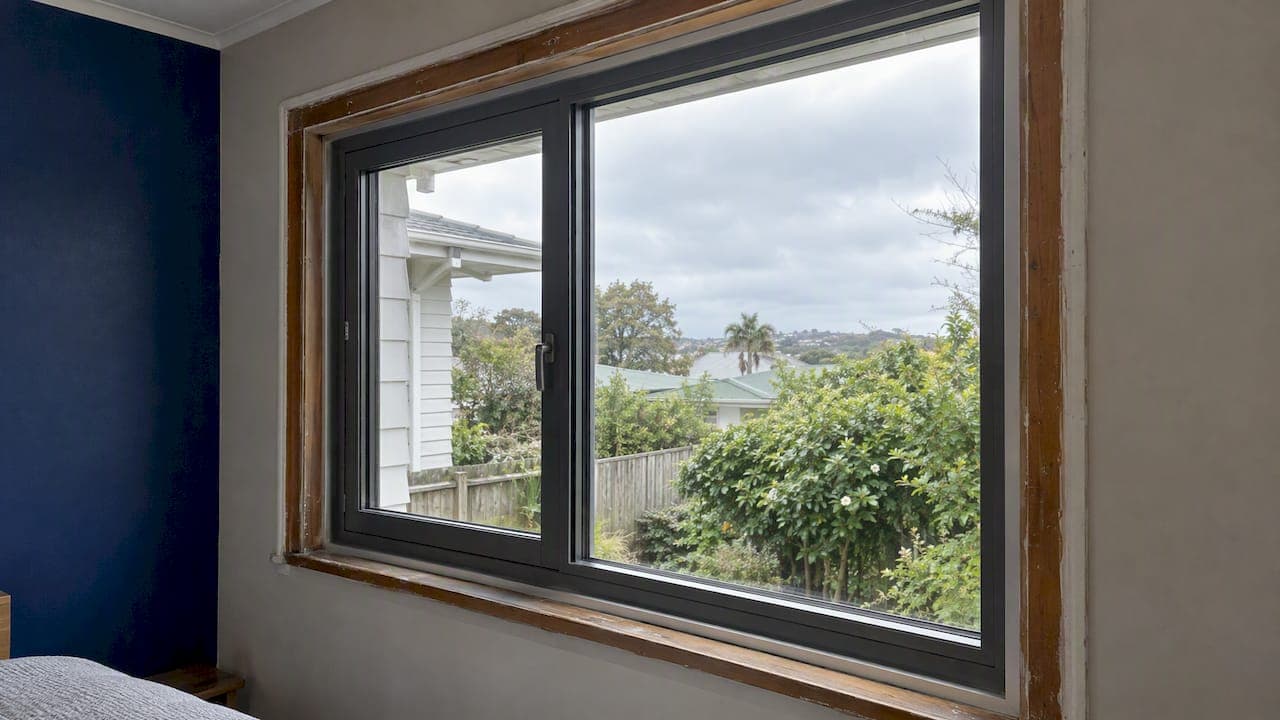
Insert window replacement means fitting a new, double-glazed aluminium (or thermally broken aluminium) subframe inside your existing timber window frames, so the old sashes and hardware come out but the outer frames, facings, sills and reveals stay put. It suits homes whose frames are still sound, straight and free of serious rot. When the frames are past saving, a full replacement is the right call. This guide explains how to tell which one your house needs, what each involves, and what to check before you sign a quote.
TL;DR
- An insert replacement puts a new double-glazed subframe into your existing outer frame, leaving the facings, sills and reveals in place, so there is less mess and less work to make good.
- It only works when the existing frames are viable: plumb, square, straight and free of unrepairable rot. A proper assessment comes before any price.
- Full replacement removes the whole window, including the frame, and suits rotted, out-of-square or failed joinery, or when you want a new layout.
- Like-for-like replacement in an existing opening is generally exempt from building consent, unless the original window failed the Building Code's durability requirements.
- Thermally broken aluminium is worth pricing in, because condensation forms more readily on standard aluminium frames.
Table of Contents
- What an insert window replacement actually is
- Insert, full frame and full replacement: the differences
- When can you replace windows without removing the frames?
- Building consent: what you need to know
- Materials and glazing: what to choose
- How measuring and installation work
- What drives the price
- Questions to ask before you sign
- Our perspective
- Get a recommendation for your home
- Special cases worth knowing about
- FAQ
- Sources
What an insert window replacement actually is
Picture a typical Auckland villa, bungalow or 1970s timber-joinery home. The windows are timber-framed, single glazed, draughty and often wet with condensation on winter mornings. Replacing every window from scratch means cutting out the frames, disturbing the cladding or lining around them, and repainting inside and out.
An insert replacement takes a different route. According to the Window and Glass Association (WGANZ) installation guide for insert windows, the work installs new aluminium, thermally broken aluminium or uPVC subframes into the existing timber outer frames, leaving the facings, sills and reveals in place. It is described there as an economical, typically non-invasive way to lift building-envelope performance with double glazing.
In practical terms:
- The old sashes and hardware are removed.
- The opening is prepared.
- A new, precisely made frame is set, packed and sealed inside what remains.
The finished window sits within the original frame. From inside, your existing reveals and trims are still there. From outside, the original facings remain.
Insert, full frame and full replacement: the differences
Searchers use several terms for what is really a choice between two approaches. Full frame replacement, full replacement windows and full replacement of windows and doors all describe the same thing: taking the whole unit out. Insert, retrofit-style and subframe replacement describe leaving the outer frame.
The general distinction, as Bob Vila's replacement window guide puts it, is that inserts leave the existing interior and exterior mouldings unaffected, while full replacement removes the existing window, including casings, frame, sash and exterior trim. Inserts involve less labour, cost and mess.
| Insert replacement | Full replacement | |
|---|---|---|
| What comes out | Old sashes and hardware | Entire window: frame, sash, trim |
| What stays | Outer frame, facings, sills, reveals | Nothing of the old unit |
| Disturbance to walls and linings | Low | Higher, with making good needed |
| Best when | Frames are sound, straight and square | Frames are rotted, twisted or failed |
| Layout or size changes | Not suited | Possible |
| Typical finish work | Minimal | Architraves, flashings and painting often needed |
Neither is better in every house. The right choice depends on the condition of what is already in the wall, and that is why an assessment should come before any price.
When can you replace windows without removing the frames?
The short answer is yes, as long as the existing frames are viable. WGANZ says to assess viability before pricing an insert project: the frame condition, any obvious repairs such as rot, and whether the frames are plumb, square and straight. It states that inserts suit frames that are viable and free from unrepairable rot.

Here is how that looks on a site visit.
Signs your frames are good candidates
- The timber is solid when probed, with no soft spots at the sill or the bottom corners of the jambs.
- The opening is square and the frame is not bowed or twisted.
- The surrounding cladding and flashings are in good order, with no leaks tracking into the wall.
- You are happy with the existing window positions and sizes.
- You like the internal timber reveals and do not want them disturbed.
Signs you are looking at full replacement
- Rot reaches into the frame, sill or the framing behind it.
- The frames are out of square or have shifted enough that a precise insert will not sit properly.
- You want to enlarge, shrink or reconfigure openings, for example turning a window into a sliding door.
- The surrounding wall has moisture damage that needs to be opened up and repaired.
- The existing windows have already failed prematurely.
A good installer tells you honestly which side of the line your house sits on, and shows you the evidence. Both outcomes are legitimate. A house with a mix, say sound frames in the living areas and a rotted bathroom window, often ends up with inserts in most openings and full replacement in the few that need it.
Building consent: what you need to know
Most homeowners want to know whether they need council approval. The Building Performance (MBIE) guidance on windows and exterior doorways in existing dwellings says that building work on a window or exterior doorway in an existing dwelling is usually exempt from consent, provided the original has not failed prematurely and the work does not affect a specified system such as a fire alarm or sprinklers.
The catch is the 15-year durability expectation. The same page says that if a window installed within the last 15 years has failed, for example by rotting out, replacing it requires building consent. A window older than that which has rotted out does not.
BRANZ's article on replacing windows in existing openings adds that a comparable replacement window in the same position is generally exempt unless the original failed the Building Code's 15-year durability or weathertightness requirements. It also notes that the replacement options it discusses are Alternative Solutions rather than Acceptable Solutions, so they must satisfy the local building consent authority's requirements. If you are unsure, ask your installer and your council before work starts. For a broader walk-through, see our guide to building code compliance for NZ windows and doors.
Materials and glazing: what to choose
BRANZ notes that replacement options are typically aluminium or uPVC, because new timber or steel windows are seldom installed given their high relative cost. Aluminium is the material we work in, and for good reason in Auckland: it is strong, slim, low maintenance and handles coastal conditions well.
Why double glazing matters here
If you replace timber frames with aluminium, BRANZ says double-glazed units are most likely required to achieve at least the original window's R-value. Insert frames, WGANZ says, are double glazed and must meet NZS 4211 performance requirements for the site's wind zone, including structural integrity and weathertightness.
The Building Code's energy guidance supports the logic. According to MBIE's H1 guidance on repairs and replacements, replacing a small part of the building envelope should not reduce the building's overall thermal resistance, and a double-glazed aluminium window, or extra insulation elsewhere, can offset the lower thermal resistance of an aluminium frame.
Thermally broken or standard aluminium?
Consumer NZ's guide to replacing your windows notes that aluminium double glazing is popular in New Zealand, and that thermally broken frames are preferable if you can afford them, because condensation is more likely to form on standard aluminium frames. A thermal break is a barrier inside the frame that interrupts the path of heat between inside and outside.

If cold, damp windows are what is driving your project, read our guides on thermally broken windows in NZ and how to avoid condensation on windows before you compare quotes.
How measuring and installation work
Precise measurement is the heart of an insert job. WGANZ stresses that the new frame has to fit within the existing frame, so openings are measured on site, usually at several points, and the units are made to those dimensions rather than picked from a standard-size list. Walls and frames are rarely perfectly square, especially in older homes, which is why the viability check comes first.
The installation sequence, following the manufacturer's specific requirements, looks like this:
- Assessment and measure. Frame condition, squareness and any repairs are noted. Each opening is measured.
- Manufacture. Frames are made to size, with your chosen glazing, colour and opening style.
- Removal. Old sashes and hardware come out.
- Preparation. The opening is cleaned up and any minor repairs made.
- Setting, packing and sealing. The new insert frame is positioned, packed so it is plumb and level, fixed and sealed.
- Finishing. Hardware is checked, the units tested and the site left clean.
Consumer NZ says replacement window installation usually takes a couple of days, and that architraves and painting the frames may be needed afterwards. Insert work tends to leave less of this to do than full replacement, because more of the original finish stays intact. For more on the process, see our homeowner's guide to installing aluminium windows.
What drives the price
We do not publish fixed prices, because every house is different, and we would rather quote on what we have seen than guess. These are the factors that move a quote up or down:
- Number and size of windows. Larger units and sliding or bifold doors cost more than small fixed panes.
- Insert or full replacement. Inserts avoid much of the removal and making-good work, while full replacement involves the frame, flashings and linings.
- Frame and glass specification. Standard aluminium, thermally broken frames, and the type of glass all change the price.
- Access. Second-storey windows, steep sites and tight access add time.
- Condition of the opening. Rot repairs or framing work are extra to the window itself.
- Finishing. Architraves, painting and colour choices.
When comparing quotes, check that each one covers the same specification and states whether finishing and making good are included. Our window replacement price guide for NZ goes into this in more detail.
Questions to ask before you sign
A short list that sorts good quotes from vague ones:
- Have you inspected the existing frames, and what did you find?
- Is this insert or full replacement for each opening, and why?
- Is the glazing double, and is the frame thermally broken?
- Who handles any building consent query, if one applies?
- What finishing is included, and what is left for me?
- What does the workmanship warranty cover, and for how long?
On that last point, our installations carry a five-year workmanship warranty.
Our perspective
We work only in aluminium joinery, and that focus shapes how we approach every replacement. Most Auckland homeowners who call us about draughty, damp windows are not really asking for a product. They are asking for a warmer, quieter, better-looking house without months of disruption.
That is why we look at the frames first. Where the existing timber is sound, an insert gives you new double glazing and modern aluminium with the original reveals and facings left alone. Where it is not, we say so, and a full replacement sets the house up properly for the next few decades. We would rather fit the right solution than the quicker one.
Precision is what we are proudest of. A well-measured, well-sealed frame is the difference between a window that quietly performs and one that leaks or rattles. We aim to integrate modern designs into existing structures so the result looks like it belongs to the house, and we stand behind it with a five-year workmanship warranty.
If you are weighing up options, ask us to look at your frames. You will get a clear recommendation, opening by opening.
Sharim
Get a recommendation for your home
We supply and install aluminium windows and doors across Greater Auckland, for homes and commercial properties, including single and double glazing and thermally broken frames. For renovations we offer both insert and full replacement solutions, so the recommendation follows your frames rather than a single product. See our insert and full replacement windows and doors page, or start from our aluminium windows range.

If you are also planning new doors, we make sliding doors, bifold doors, French doors and entry doors to match.
Special cases worth knowing about
Brick and masonry homes
Brick houses bring their own considerations around reveals, sills and cladding. Our guide to replacing windows in a brick house covers them.
Character and older homes
If your home is a villa or has heritage features, preserving the look matters as much as performance. Inserts can help because the original facings and reveals remain. Read our historic home window replacement guide, and check whether any heritage overlay applies with your council.
Energy performance
If warmth and running costs are your priority, our energy efficient windows guide for Auckland homeowners explains glazing choices in plain terms.
FAQ
What is an insert window replacement?
It is a method of installing a new double-glazed aluminium or uPVC subframe inside your existing timber outer frame. The old sashes and hardware are removed, but the facings, sills and reveals stay in place. It is typically less invasive than taking the whole window out.
Can I replace windows without removing the frames?
Yes, if the existing frames are viable: plumb, square, straight and without unrepairable rot. An installer should assess this before pricing. If the frames fail that check, full replacement is the sound option.
Do I need a building consent to replace my windows?
Usually not, for a comparable replacement in an existing opening of an existing dwelling. The exception is where the original window has failed the Building Code's 15-year durability requirement, for example by rotting out within 15 years of installation, or where the work affects a specified system. Check with your installer and council if you are unsure.
How long does installation take?
Consumer NZ says replacement window installation usually takes a couple of days. Architraves and painting may be needed afterwards, depending on the job. We will confirm the timeframe for your home once we have measured it.
Is it worth replacing old windows?
If your windows are draughty, single glazed or prone to heavy condensation, replacing them with double-glazed aluminium, ideally thermally broken, targets those problems directly. The right method, insert or full replacement, depends on the frames.
Sources
- WGANZ installation guide for insert windows (2023)
- Bob Vila: Replacement Windows 101
- Building Performance: Windows and exterior doorways in existing dwellings and outbuildings
- BRANZ: Replacing windows in existing openings
- Building Performance: H1 repairs and replacements
- Consumer NZ: Replacing your windows