
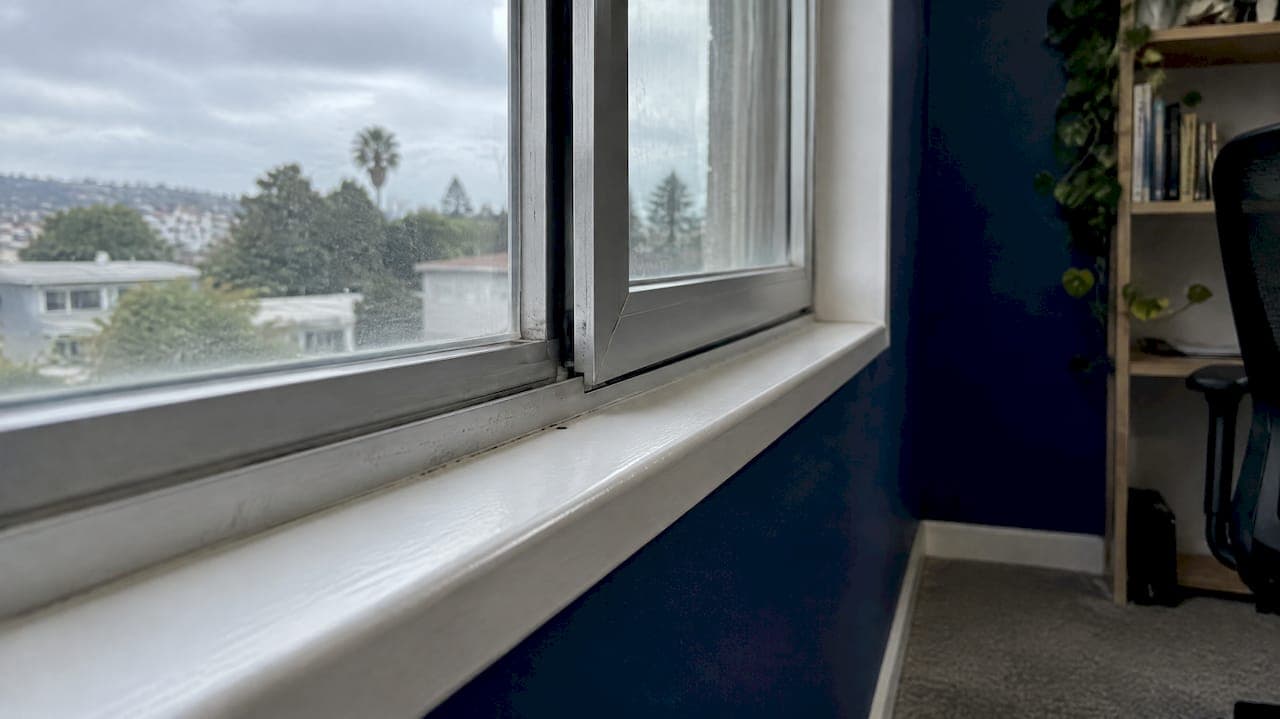
Windows rattle when something that should be held firm has come loose: worn seals, a sash that no longer sits tight, a catch that has lost its grip, or glass that is no longer properly bedded. Wind simply gives the movement a voice. Work out which part is moving, tighten or replace what is worn, and the noise usually goes with the draught that comes with it.
This guide shows you how to find the source in about ten minutes, which temporary measures are sensible, and when it is time to call a specialist. It is written for Auckland homes, where wind, rain and salt air test every window.
TL;DR
- A rattle is almost always movement: loose glass, a worn seal, slack hinges or catches, or a sash that no longer fits snugly.
- Check the hardware first. Loose hinges, catches and latches let air in and let the window shake.
- Gaps wider than about 3 mm around a window usually need blocking, and a window that rattles often has one.
- Foam strips, V-seals and thick lined curtains are stopgaps. A worn frame, seal or hinge needs a proper repair.
- If the window is failing or the frame is worn out, repair or replacement by a specialist is the lasting answer.
Table of Contents
- Why windows rattle, especially in wind
- How to find what is actually rattling
- What the symptom usually means
- Quick fixes that are safe to do now
- Rattling aluminium sliding windows and other types
- If you rent
- When to call a specialist, and when to replace
- Get the rattle fixed properly
- FAQ
- Sources
Why windows rattle, especially in wind
Wind pushes and pulls on glass and sashes. A tight window absorbs that load quietly. A loose one moves a millimetre or two against its frame, and that is the noise you hear at 2 am.
The usual causes fall into four groups:
- Loose or failing glazing seals. In older timber and steel windows, cracked or damaged putty can cause draughts, leaks and rattling, according to Consumer NZ. In aluminium windows, the equivalent is a perished rubber gasket or bead around the glass.
- Worn weatherstripping. Pile strips and rubber seals flatten and shrink over the years. Once they stop filling the gap between sash and frame, the sash can knock against the frame.
- Slack hardware. Hinges, stays, catches and latches wear and loosen. The window no longer pulls tight to the frame, so it chatters when gusts hit.
- Movement in the frame or opening. Frames that have shifted, or a sash that has dropped slightly, leave uneven gaps. One side is tight and the other rattles.
MBIE's Building Performance team notes that draughts from doors and windows are common and often a sign that maintenance is needed. A rattling window and a draughty window are usually the same problem seen from two angles.
How to find what is actually rattling
Do not start by buying sealant. Spend ten minutes finding the cause, because the fix for a loose sash is different from the fix for loose glass.
Step 1: Listen and press
On a windy day, or by pushing gently, find where the noise comes from. Press on the glass near each corner, then on the sash, then on the frame. Note whether the sound comes from the glass in its frame, the sash in the opening, or the catch and hinge area.

Step 2: Look for the draught path
MBIE says that if your curtains are moving, that points to a draught. It also suggests running a strip of single-ply toilet paper around the edge of the window frame to find where air is getting in. Consumer NZ suggests tissue paper or a lit candle for the same job. If you try a candle, keep curtains well clear of it.

The spots where the paper flutters tell you where the seal has failed or the sash is sitting off.
Step 3: Check the hardware
Close the window and try the catch. Does it pull the sash tight to the frame, or does the sash still move once it is locked? Wiggle the hinges and stays. BRANZ advises that before fitting any draught seal you should check for loose hinges, catches and latches and tighten or replace them, because loose hardware adds to air leakage.
Step 4: Check the gaps
Look around the sash and where the frame meets the wall. Tenancy Services uses a rule of thumb that gaps wider than 3 mm around windows and doors usually need blocking to prevent unreasonable draughts. It is a handy yardstick for any home, not only rentals.
Step 5: Check the drainage and finish
Consumer NZ recommends keeping window drain holes clear and keeping windows well painted. Moisture that sits in a frame speeds up wear, and swollen or deteriorated parts stop fitting properly.
What the symptom usually means
| What you notice | Likely cause | What it needs |
|---|---|---|
| Glass buzzes when you press it | Gasket or bead has shrunk or hardened, or putty has failed | Reglazing or new glazing seals |
| Sash knocks in the frame but the catch is locked | Worn weatherstrip or sash sitting loose | New seals, adjustment, or new hardware |
| Rattle when the catch is open, silent when closed | Normal play in the stay or hinge | Check the closing action and hinge wear |
| Curtains move, paper flutters at the corners | Gaps at the sash edge or frame | Seal replacement, hardware adjustment |
| Noise comes from the frame edge at the wall | Gap or movement between frame and opening | Specialist assessment |
Quick fixes that are safe to do now
If you want some relief before a proper repair, these are low-risk options. Treat them as stopgaps for a window that is still sound.
- Tighten what is loose. Consumer NZ suggests tightening catches and latches so windows are pulled tight to the frame. Use the right screwdriver and do not overtighten into soft or stripped fixings.
- Add self-adhesive foam or rubber strips, or V-seals. MBIE describes these as options for window gaps. Clean and dry the surface first so the strip bonds.
- Use pile seals on sliding sashes. BRANZ describes brush pile seals for sliding windows and doors that can seal gaps of 3 to 15 mm. A New Zealand supplier notes its woven pile weatherstripping is low friction and suitable for sliding, folding and compression applications and offers resistance to air, water, noise and smoke.
- Hang thick, lined curtains. MBIE recommends well-fitted lined curtains with no gaps at the edges, reaching the floor, with a pelmet on top. They will not stop glass rattling, but they cut the draught and soften the sound.
A caution on sealant: do not gum up drain holes or the moving parts of a sash. Seals that stop a sash from closing fully will make the problem worse.
Rattling aluminium sliding windows and other types
Aluminium is stable, so when an aluminium window rattles the cause is nearly always a component around the frame rather than the frame itself. The usual culprits are:
- Sliding windows: worn pile strips at the sash edges, rollers that have dropped, or a latch that no longer engages firmly. If the sash itself moves in its track, sealing around the outside of the frame will not help, because the movement is inside the window.
- Awning and casement windows: worn hinges or stays and compressed seals. See our guide to aluminium window hinge replacement for what is involved.
- Fixed panes: glazing gaskets or beads that have hardened or loosened.
- Sliding and bifold doors: worn rollers, tracks and brush seals, and locks that no longer pull the door tight.
As a stopgap, consumers often add strips and tighten screws. These help, but a window that has lost its fit needs the worn component replaced. That is quick for a trained installer who carries the parts and knows the system.
If you rent
Tenancy Services is clear that unreasonable gaps cannot be temporarily fixed by tenants with draught stopping products. The landlord has to address the draught by fixing something to the home or remedying the gap long term. Its guidance says that gaps and holes in windows, doors, walls, ceilings and floors that are not necessary and cause noticeable draughts must be blocked.
So if you are a tenant, tell your landlord in writing about the rattle and the draught. If you are a landlord, a repair by a window specialist is the straightforward way to settle it.
Our view: fix the fit, not just the noise
Most rattles we are called to are not mysterious. A sash has lost its snug fit, a seal has worn out, or a hinge or catch has slackened. Foam strips can quieten things for a season, but the cause is still there, and so is the draught.
We work only with aluminium joinery, so we know how these windows are put together and which parts wear. That focus is why we like to look at the whole window: the glazing, the seals, the hardware and the way the frame sits in the opening. Where a repair will do, a repair brings the window back to firm, quiet operation. Where an older frame is worn out or a design no longer suits the home, replacement or an insert window is a neat way to bring in a modern, well-fitted unit without disturbing the rest of the house.
Auckland is windy, wet and salty. A window that fits precisely and is installed carefully handles that far better than one that has been patched. That is why we back our installation with a five-year workmanship warranty.
Sharim
When to call a specialist, and when to replace
Call a window specialist when:
- The rattle remains after you have tightened the hardware and checked the seals.
- Hinges, rollers or catches are worn out or broken.
- The glass moves in its frame or the glazing seal has perished.
- The sash no longer closes square, or the frame has shifted.
- You see damp, condensation between panes or deterioration around the frame.
- The windows are old enough that parts are hard to match.
Repair is usually the answer when the frame is sound and only seals, hardware or glazing components are worn. Replacement is worth considering when frames are damaged, when single glazing is part of the discomfort, or when you want better thermal performance. Our guides on thermally broken windows, energy efficient windows and double glazing and noise explain what upgrading can bring. For budgeting, see the cost to replace windows guide.
Do you need a building consent?
Often not. MBIE says a consent is usually not needed for work on a window or exterior doorway in an existing dwelling or outbuilding, provided the original has not failed prematurely and the replacement will not affect a specified system. The same page says that replacing a window or door installed within the last 15 years that has failed, for example by rotting out, does need a building consent. The Licensed Building Practitioners scheme makes the same point: exempt work applies to dwellings of no more than two storeys, and the replacement must not have failed Building Code durability requirements. If your home is a brick house or has unusual openings, our guides on replacing windows in a brick house and Building Code compliance cover the detail.
Get the rattle fixed properly
We supply, install and repair aluminium windows and doors across Greater Auckland, for homes and commercial properties. That includes sliding windows, casement windows, sliding and bifold doors, French doors, entry doors, insert and full replacement units, and commercial shopfronts.
If your windows rattle, leak air or no longer close properly, our aluminium window and door repairs service is the place to start. If the frames are due for an upgrade, look at our insert and full replacement options, or browse our aluminium windows. Every installation carries our five-year workmanship warranty.

Tell us which windows rattle and when, and we will tell you what the job involves.
FAQ
Why do my windows rattle only when it is windy?
Wind loads the glass and sash, and any looseness in seals, hinges or catches becomes noise. When it is calm, the window sits still. The rattle is a sign of play in the fit, and the same play often lets draughts in, so it is worth finding the cause.
How do I stop windows rattling without replacing them?
First tighten catches, latches and hinges so the sash pulls firmly to the frame. Then add self-adhesive foam or rubber strips, V-seals or pile strips where gaps are visible. If the window still rattles, a worn seal, glazing gasket or hinge probably needs replacing by a specialist.
Can I use a draught stopper on windows?
Yes, for a sound window. MBIE describes foam and rubber strips and V-seals as options, and lined curtains also help. Tenants should note that Tenancy Services says unreasonable gaps need a long-term fix by the landlord rather than a temporary product.
Why does my aluminium sliding window rattle?
Usually the pile seals at the sash edges have worn, the rollers have dropped, or the latch no longer holds the sash firmly. Cleaning the track and checking the latch are good first steps. If the sash still moves, the parts need replacing.
Do I need a consent to replace a rattling window?
For an existing dwelling, consent is usually not needed if the original has not failed prematurely and nothing specified is affected. A window installed in the last 15 years that has failed, such as by rotting, does need consent. Check with your installer or council before work starts.
Sources
- Windows and doors, Consumer NZ
- Stopping draughts, MBIE Building Performance
- Draught Stopping Guidance Document, Tenancy Services
- BRANZ Bulletin BU659, Upgrading the thermal performance of timber windows
- Woven pile weatherstripping, Doric
- 3.1 Windows and exterior doorways in existing dwellings and outbuildings, MBIE
- Know your stuff: Exempt Building Work, Part 2, Licensed Building Practitioners